

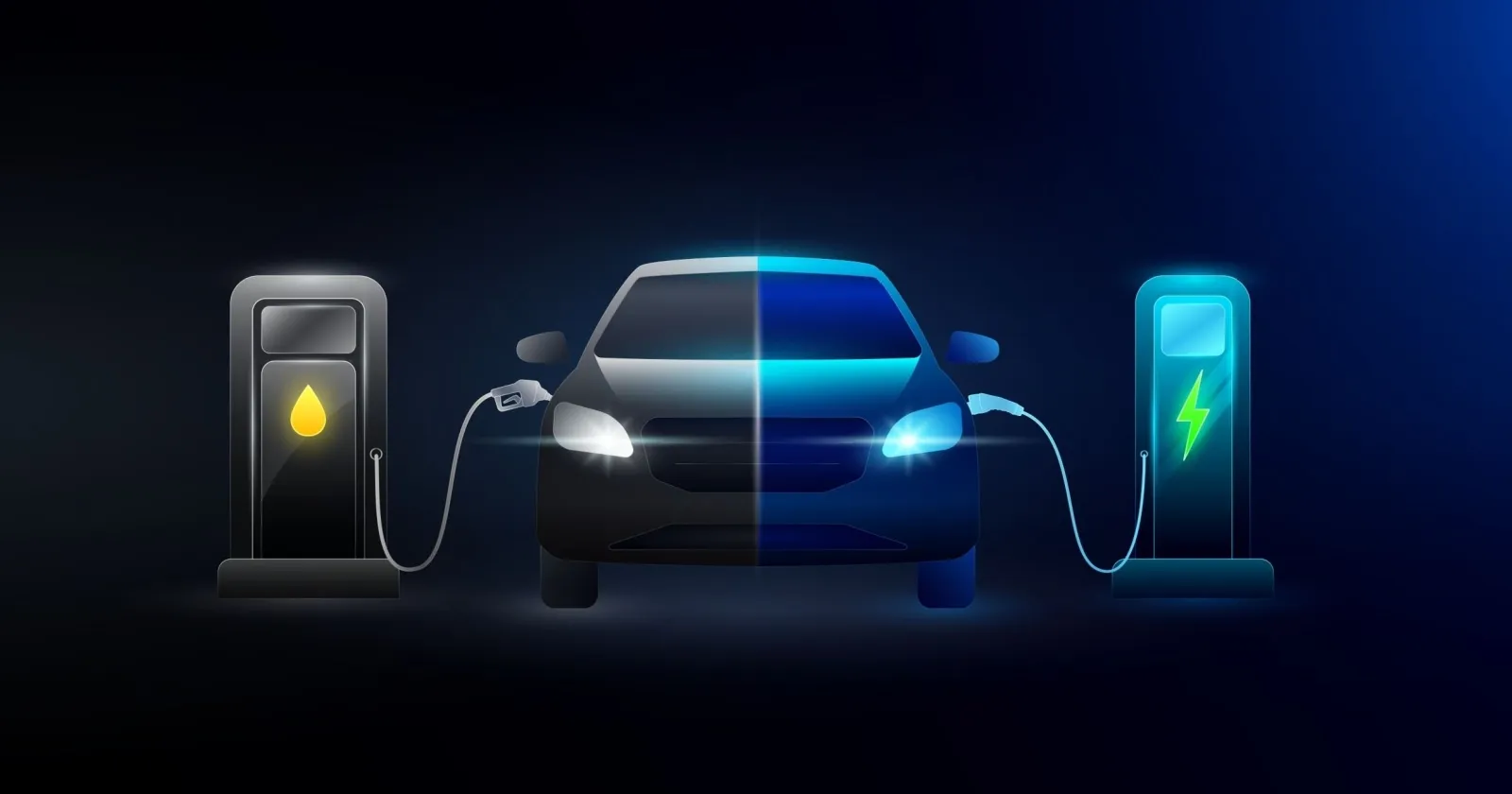
Choosing between a hybrid car and a fully electric vehicle (EV) is no longer a niche decision. With rising fuel costs, environmental concerns, and advancing technology, both options are becoming mainstream. However, the right choice depends on your driving habits, budget, and access to infrastructure.
This guide breaks down the key differences in a practical, no-nonsense way so you can decide confidently.
What Is a Hybrid Car?
A hybrid vehicle combines a traditional internal combustion engine (petrol/diesel) with an electric motor.
Key Features:
- Uses both fuel and battery power
- Automatically switches between engine and motor
- No need for external charging (in most hybrids)
Types of Hybrids:
- Mild Hybrid (MHEV): Assists engine, cannot run on electricity alone
- Full Hybrid (HEV): Can drive short distances on electric power
- Plug-in Hybrid (PHEV): Larger battery, can be charged externally
What Is an Electric Car?
An electric vehicle (EV) runs entirely on electricity and has no fuel engine.
Key Features:
- Powered by a rechargeable battery
- Requires charging via home or public stations
- Zero tailpipe emissions
Key Differences: Hybrid vs Electric
1. Fuel vs Charging
- Hybrid: Uses fuel, no charging required (except PHEVs)
- Electric: Fully dependent on charging infrastructure
👉 If charging stations are scarce in your area, hybrids offer more flexibility.
2. Running Costs
- Hybrid: Lower fuel consumption than regular cars
- Electric: Significantly cheaper per kilometer
Electric cars win in long-term savings, especially with rising fuel prices.
3. Upfront Cost
- Hybrid: Generally cheaper than EVs
- Electric: Higher initial price due to battery technology
However, government incentives can reduce EV costs in some regions.
4. Maintenance
- Hybrid: Moderate (engine + battery system)
- Electric: Low (fewer moving parts, no oil changes)
EVs are simpler machines, which translates to lower servicing costs.
5. Driving Experience
- Hybrid: Similar to conventional cars
- Electric: Smooth, silent, instant acceleration
If you enjoy a modern, quiet ride, EVs stand out.
6. Environmental Impact
- Hybrid: Reduced emissions
- Electric: Zero emissions (at tailpipe)
EVs are cleaner overall, especially when powered by renewable energy.
7. Range and Convenience
- Hybrid: Longer range, quick refueling
- Electric: Limited range, longer charging time
For long-distance travelers, hybrids still offer more convenience.
Pros and Cons Summary
Hybrid Cars
Pros:
- No range anxiety
- No dependency on charging infrastructure
- Better fuel efficiency than traditional cars
Cons:
- Still relies on fossil fuels
- More complex system (engine + battery)
- Less eco-friendly than EVs
Electric Cars
Pros:
- Zero emissions
- Lower running and maintenance costs
- Quiet and smooth driving experience
Cons:
- Charging infrastructure may be limited
- Higher upfront cost
- Charging time can be inconvenient
Which One Should You Choose?
Choose a Hybrid if:
- You frequently drive long distances
- Charging stations are limited in your area
- You want a balance between fuel efficiency and convenience
Choose an Electric Car if:
- You drive mostly within the city
- You have access to home or nearby charging
- You want the lowest running cost and environmental impact
Final Thoughts
There’s no one-size-fits-all answer. A hybrid car is a practical transition, especially in regions where EV infrastructure is still developing. On the other hand, electric cars represent the future, offering cleaner and more cost-efficient mobility.
Your decision should align with your daily driving needs, budget, and long-term priorities—not just trends.
Frequently Asked Questions (FAQs)
1. Are electric cars cheaper than hybrids in the long run?
Yes, electric cars typically have lower running and maintenance costs, making them cheaper over time despite higher upfront prices.
2. Do hybrid cars need charging?
Most hybrids do not require external charging, but plug-in hybrids (PHEVs) can be charged for better efficiency.
3. How long do electric car batteries last?
Most EV batteries last 8–15 years or more, depending on usage and conditions.
4. Is it safe to buy an electric car in areas with fewer charging stations?
It can be challenging. In such cases, a hybrid is often the safer and more practical choice.
5. Are hybrids environmentally friendly?
They are more eco-friendly than traditional cars but still emit some pollutants due to fuel usage.
6. How long does it take to charge an electric car?
Charging time varies:
- Fast charger: 30–60 minutes
- Home charger: 6–10 hours
7. Which is better for city driving?
Electric cars are ideal for city driving due to lower costs, smooth performance, and zero emissions.